Friday, April 13, 2012

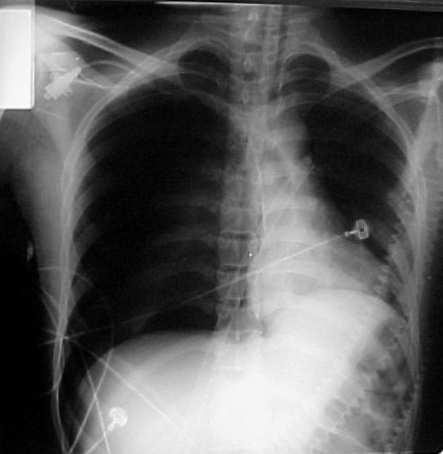
bedside ultrasound vs. supine chest x-ray for pneumothorax

RAGING HYPOTHETICAL:
--trauma patient, worried about pneumothorax
--how good is the bedside ultrasound? (sliding lung sign)


YOUTUBE ASSIST:


STUDY 1 (176 patients):
  • sensitivity (CXR): 75.5%
  • sensitivity (US): 98.1%
  • specificity (CXR): 100%
  • specificity (US): 99.2%

STUDY 2 (120 patients):
  • sensitivity (CXR): 82.7%
  • sensitivity (US): 89.7%
  • specificity (CXR): 100%
  • specificity (US): 97%

REVIEW ARTICLE (4 articles, 606 patients):
  • sensitivity (CXR): 28-75%
  • sensitivity (US): 86-98%
  • specificity (CXR): 100%
  • specificity (US): 97-100%  


BOTTOM LINE:
--bedside ultrasound vs. supine CXR for pneumothorax...
--both are very specific
--ultrasound is more sensitive than supine CXR


Submitted by S. Lee.


Reference(s): youtube video, study 1, study 2, review article, picture

Thursday, April 12, 2012

decision rule for subarachnoid hemorrhage?

THOSE CANADIANS ARE AT IT AGAIN:
--study by Ottawa docs, Perry et al. reviewed nicely in an AAEM/Common Sense article (see reference)
--tried to identify a set of clinical characteristics to make a decision rule for those who need SAH workup


BASIC STRUCTURE:
--1,999 patients, 130 diagnosed with SAH
--SAH diagnosis defined by +CT, xanthrochromia, or >5 x 10^6/L RBCs + aneurysm/AVM on cerebral angiography

--included:
  • adults (>16 yo)
  • chief complaint = headache
  • GCS 15
  • non-traumatic
  • peak intensity of HA within 1 hr
--excluded:
  • >2 wks after symptom onset
  • prior SAH
  • previous CT and/or LP workup
  • 3 similar HA's within past six months
  • papilledema/focal neuro symptom
  • prior hydrocephalus or cerebral neoplasm

RULES THEY CAME UP WITH:
--all have sensitivity 100%, but specificity sucked (28-39%)

--the rules (each set works to help rule-out SAH):
  • age >40, neck pain/stiffness, witnessed LOC, DBP > 100mmHg
  • arrival by EMS, age>45, vomiting, DBP > 100
  • arrival by EMS, age 45-55, neck pain/stiffness, SBP > 160


BOTTOM LINE:
--nice study, helps think about why we do what we do, but isolated population
--the extra H&P details (age, BP, vomiting, neck pain/stiffness, etc.) are not very specific for SAH, but together might be sensitive (reminds me of appendicitis)
--not ready for primetime just yet, but food for thought


Submitted by S. Lee.


Reference(s): AAEM/RSA review, picture

Wednesday, April 11, 2012

what's a TAVI?


vck8sm5h Transcatheter Aortic Valve Implantation (TAVI) Reduces Mortality Rate Compared to Standard Therapy


RAGING HYPOTHETICAL:
--Hypotensive, elderly gentleman presents to your ED, records show he's had a TAVI

--You nod your head with a reassurring look, then run to google...

--Next time you won't need to - because you read this post.


WHAT'S A TAVI?

Transcatheter Aortic-Valve Implantation (TAVI) for patients with severe aortic stenosis who are not candidates for surgery.

What it looks like:

kdaesp1huv Transcatheter Aortic Valve Implantation (TAVI) Reduces Mortality Rate Compared to Standard Therapy


How it is placed: (so cool and worth watching)
The implantation procedure involves accessing a femoral artery, performing balloon valvuloplasty, then advancing the device across the native valve. During rapid right ventricular pacing, a balloon is inflated to deploy the valve and the frame.

Video animation: http://youtu.be/_eiI6S62zOs


Evidence it works:

At one year, the rate of death from any cause was 30% with TAVI vs. 50.7% with standard treatment (balloon aortic valvuloplasty and or medical therapy)


Not so good: TAVI had a higher incidence of strokes and major vascular complications compared to standard treatment, however this was included in rate of death.


Now you know :)


Submitted by S. Morris.

Monday, April 9, 2012

fear the low quantitative hCG

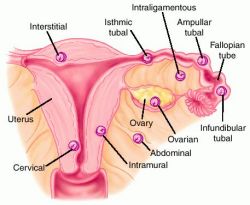
CONCERNED FOR ECTOPIC PREGNANCY?
--first trimester, vaginal bleeding, abdominal pain
--fear the low quant.


STUDY:
--by Kohn et al in 2003 from Acad EM
--looked at beta HCG levels in normal and abnormal early pregnancies
  • 730 ED pt's (retrospective chart review)
  • 253 abnormal IUP (mostly miscarriage)
  • 381 normal IUP
  • 96 Ectopics 

--Abnormal IUP and ectopic pregnancies had similar low beta HCG levels.

--Patients with HCG <1500 were twice as likely to have ectopic pregnancy (LR 2.24).
  • 42% of the ectopics had HCG <1500
  • only 7% of the normal IUP's had HCG <1500

BOTTOM LINE:
--Remember that the descriminatory beta HCG for TV US is >1500, making early pregnancy vs.ectopic with unclear ultrasound a tough decison without surgical pathology.
--HCG <1500 but non-diagnostic ultrasound, fear the ectopic
--stable patient: typical course of action is repeat HCG in 48 hrs
--unstable/borderline patient: have a low threshold of suspicion for ectopic

SCARY PARTING THOUGHT:

Submitted by S. Morris.

Reference(s): study, case report, picture 

Friday, April 6, 2012

plastic bronchitis

PMID: 22430124
--Do P, Randhawa I, Chin T, Parsapour K, Nussbaum E., Successful Management of Plastic Bronchitis in a Child Post Fontan: Case Report and Literature Review. Lung. 2012 Mar 20. [Epub ahead of print]


QUICK LEARNING POINTS:
--Plastic bronchitis is a rare, potentially fatal, condition noted in patients after Fontan surgery.

--The mucoid impaction with cast formation occludes the major bronchi with firm, gelatinous material. 

--Acute management involves ABCs (airway, breathing, circulation), potentially requiring intubation for respiratory failure. 

--General airway clearance measures with bronchodilators and chest physiotherapy should be initiated.

--In emergent cases, immediate bronchoscopy, whether rigid or flexible, should be considered.  Bronchial casts are unique foreign bodies that may be friable or dissolvable, making lavage a necessary component of its removal.

--While bronchoscopy can be effective for acute therapy, it does not prevent recurrence nor should it be utilized on a chronic basis. 


BOTTOM LINE:
--Plastic bronchitis is a rare, potentially fatal, condition noted in patients after Fontan surgery.
--treatment toolbox: inhaled mucolytics, bronchodilators, intubation & bronchoscopy if necessary


Submitted by J. Gullo.


Reference(s): article, picture

Thursday, April 5, 2012

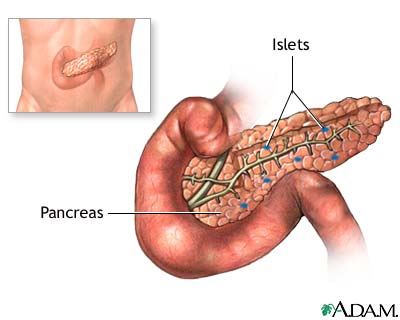
does replacement pancreatic enzymes affect lipase levels?

HEADLINE:
--According to the study below (even though its in pigs), being on replacement enzymes shouldn't affect your lipase levels. 

PMID: 14707735
--The enzyme levels in blood are not affected by oral administration of a pancreatic enzyme preparation (Creon 10,000) in pancreas-insufficient pigs.


--The current study investigated whether orally administered pancreatic enzymes were absorbed from the intestine.
 
--28 pigs; 3 control pigs with intact pancreatic function and 25 pigs that were made exocrine pancreas insufficient by duct ligation (20 pigs) or total pancreatectomy (5 pigs).

--pigs received a pancreatic enzyme preparation (0, 2, 4, or 8 g of Creon 10,000) together with the feed. The blood plasma was analyzed for pancreatic lipase activity.

--Administration of Creon (0–8 g) caused no significant changes in plasma (pro)colipase or cationic trypsin(ogen) levels.

BOTTOM LINE:
--According to the study below (even though its in pigs), being on replacement enzymes shouldn't affect your lipase levels. 


Submitted by J. Gullo.


Reference(s):
article, picture

Tuesday, April 3, 2012

urine pregnancy test using whole blood

NEAT IDEA:
--case report (link in references)

--drop of blood applied to urine HCG point-of-care test

--tested positive in the unstable ruptured ectopic patient who couldn't pee just then


BOTTOM LINE:
--patient can't/won't pee, try some blood on the urine pregnancy test

--don't know if there's any potential for false +, but in a pinch with a crashing patient, might be worth a shot


Submitted by S. Lee.


Reference(s): article, picture