Showing posts with label trauma. Show all posts

Wednesday, May 9, 2012

to CT or not CT?: Canadian CT Head Rule & New Orleans Criteria

CT or NOT?
--Papa et al. study looked at both decision rules (link below)
--314 patients (73%) had a GCS of 15
--22 of the 314 (7%) had evidence of a traumatic intracranial lesion on CT
--3 of 314 (1.0%) required neurosurgical intervention


NEW ORLEANS CRITERIA (if ANY of these are true, then do a CT ):
  • headache
  • vomiting
  • age > 60 years
  • drug or alcohol intoxication
  • deficits in short-term memory
  • evidence of trauma above the clavicles
  • seizure

CANADIAN CT HEAD RULES (if ANY of these are true, then do a CT):
  • GCS < 13
  • failure to reach GCS of 15 within 2 h
  • suspected open skull fracture
  • any sign of basal skull fracture
  • vomiting >2 episodes
  • age >65 years
  • amnesia before impact >30 min 
  • dangerous mechanism of injury (pedestrian struck by car, ejection from MVC, fall > 3 feet or > 5 stairs)

--NOC and CCHR both had 100% sensitivity (95% confidence interval [CI] = 82% to 100%)

--CCHR was more specific (36.3% specificity) for detecting any traumatic intracranial lesion on CT vs. NOC (10.2% specificity)


Friday, April 13, 2012

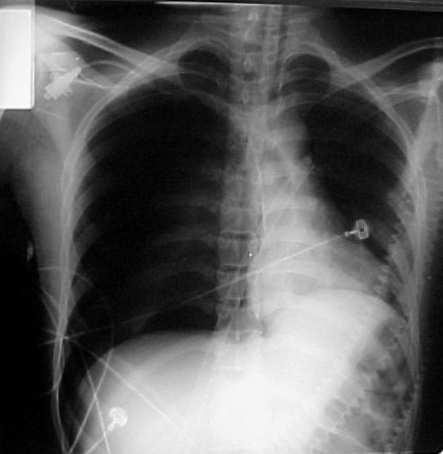
bedside ultrasound vs. supine chest x-ray for pneumothorax

RAGING HYPOTHETICAL:
--trauma patient, worried about pneumothorax
--how good is the bedside ultrasound? (sliding lung sign)


YOUTUBE ASSIST:


STUDY 1 (176 patients):
  • sensitivity (CXR): 75.5%
  • sensitivity (US): 98.1%
  • specificity (CXR): 100%
  • specificity (US): 99.2%

STUDY 2 (120 patients):
  • sensitivity (CXR): 82.7%
  • sensitivity (US): 89.7%
  • specificity (CXR): 100%
  • specificity (US): 97%

REVIEW ARTICLE (4 articles, 606 patients):
  • sensitivity (CXR): 28-75%
  • sensitivity (US): 86-98%
  • specificity (CXR): 100%
  • specificity (US): 97-100%  


BOTTOM LINE:
--bedside ultrasound vs. supine CXR for pneumothorax...
--both are very specific
--ultrasound is more sensitive than supine CXR


Submitted by S. Lee.


Reference(s): youtube video, study 1, study 2, review article, picture

Friday, January 27, 2012

hyoid bone fracture


QUICK OVERVIEW:
--rare, due to protected location of the larynx (mandible is superior and anterior and spine is posterior)

--Hyoid bone fractures from blunt trauma other than strangulation = 0.002%

--Respiratory distress can progress rapidly: hematoma formation and soft tissue swelling leads to airway compromise and hypoxia

--Laryngeal injuries occur more commonly in males (77% vs 33%)
--Women have slimmer longer necks so they are more prone to hyoid bone fractures

--symptoms: horseness, neck pain, dyspnea, dysphonia, aphonia, dysphasia, odynophonia/phagia, stridor (inspiratory), hemoptysis, subcutaneous emphysema, hematoma, ecchymosis, crepitus, loss of landmarks

--Associated injuries w/laryngeal fractures: intracranial injury (13%), open neck injury (9%), C-spine fx (8%), esophageal injury (3%)


BOTTOM LINE:
--hyoid bone fractures are rare
--most are from strangulation, few from blunt trauma
--respiratory compromise is the big issue (duh)
--associated with other head & neck badness


Submitted by J. Gullo.


Thursday, December 15, 2011

costal margin tenderness: indication for abdominal CT?

STUDY 1:
--Do patients with pain or tenderness to the left lower ribs after blunt traumatic injury require abdominal computed tomography (CT) scanning for the detection of splenic injury?

875 patients had left lower rib pain or tenderness
--63 (7.2%; 95% confidence interval [CI] 5.6% to 9.1%) patients had splenic injuries
--20 (2.3%; 95% CI 1.4% to 3.5%) patients had left renal injuries

301 (of 875 total) patients had "isolated" left lower rib injury (i.e. no other reason to get a CT)
--9 (3.0%; 95% CI 1.4% to 5.6%) had splenic injuries
--All 9 patients had a pleuritic component to their rib tenderness, and 3 (33%) patients underwent splenectomy

--"A small but important percentage of patients with pain or tenderness to the left lower ribs has splenic injuries. All patients with splenic injury had pleuritic pain."


STUDY 2:
--derive and validate clinical prediction rules to identify adult patients at very low risk for intra-abdominal injuries after blunt torso trauma

derived rule for the presence of any intra-abdominal injury:
  • GCS < 14
  • costal margin tenderness
  • abdominal tenderness
  • femur fracture
  • hematuria >= 25 RBCs/HPF
  • hematocrit < 30%
  • abnormal CXR (pneumothorax or rib fracture)
--sensitivity 137 of 143 (95.8%; 95% CI 91.1% to 98.4%)
--specificity 434 of 1,452 (29.9%; 95% CI 27.5% to 32.3%)
--negative predictive value 434 of 440 (98.6%; 95% CI 97.1% to 99.5%).

--"Patients without any of these variables are at very low risk for having intra-abdominal injury, particularly intra-abdominal injury requiring acute intervention, and are unlikely to benefit from abdominal computed tomography scanning"


BOTTOM LINE:
--2-7% those with left lower rib/costal margin pain can had splenic injury
--consider abdominal CT if patient with blunt trauma has left costal margin pain, particularly if pleuritic


Reference(s): study 1, study 2, picture