Showing posts with label gi. Show all posts

Monday, May 28, 2012

broaden your horizons (a.k.a. good luck diagnosing this one in the ED): EE

RAGING HYPOTHETICAL:
--patient with esophageal foreign body, mobilizing for GI swallow/scope
--foreign body resolved by the time GI swallow is done
--GI consult requests IgE... why?


Eosinophilic Esophagitis (EE) 


--mimics GERD and may result in narrowing or stricture of the esophagus.  


--differentiated from GERD by the amount of mucosal eosinophilia and lack of response to acid suppression.  


--In a cohort, 71% percent of patients with EE were male with a mean age of 10.5+/-5.4 years.  


--strong familial pattern 


--sometimes first presents with lodged food boluses 2/2 stricture.  


Submitted by T. Boyd.


Reference(s): Noel et al. Eosinophilic Esophagitis Correspondence. NEJM. 351:940-941. Aug 2004. picture

Thursday, April 5, 2012

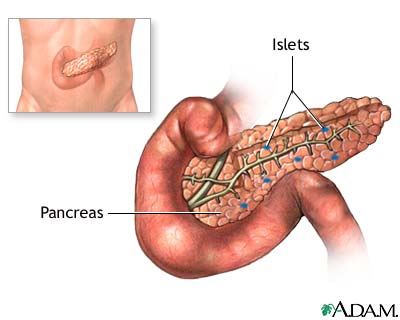
does replacement pancreatic enzymes affect lipase levels?

HEADLINE:
--According to the study below (even though its in pigs), being on replacement enzymes shouldn't affect your lipase levels. 

PMID: 14707735
--The enzyme levels in blood are not affected by oral administration of a pancreatic enzyme preparation (Creon 10,000) in pancreas-insufficient pigs.


--The current study investigated whether orally administered pancreatic enzymes were absorbed from the intestine.
 
--28 pigs; 3 control pigs with intact pancreatic function and 25 pigs that were made exocrine pancreas insufficient by duct ligation (20 pigs) or total pancreatectomy (5 pigs).

--pigs received a pancreatic enzyme preparation (0, 2, 4, or 8 g of Creon 10,000) together with the feed. The blood plasma was analyzed for pancreatic lipase activity.

--Administration of Creon (0–8 g) caused no significant changes in plasma (pro)colipase or cationic trypsin(ogen) levels.

BOTTOM LINE:
--According to the study below (even though its in pigs), being on replacement enzymes shouldn't affect your lipase levels. 


Submitted by J. Gullo.


Reference(s):
article, picture

Monday, January 30, 2012

Intussusception: quick review

(scroll to bottom for 10-second version)

DEMOGRAPHICS
--most common cause of intestinal obstruction in kids 3 months-6 years of age.
--male:female ratio is 4:1
--Seasonal variation with peaks after GI viral illness seasons.

PATHOPHYSIOLOGY
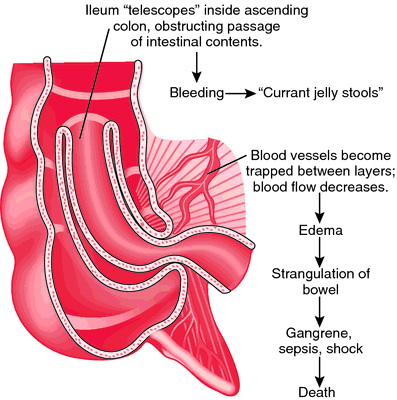
--In younger children, the ileum invaginates into the upper colon, bringing the mesentery with it (ileocolic).
--lead point is often lymphoid hyperplasia from viral gastroenteritis. 

--In older children, ileo-ileo intussusceptions are more common. 
--lead point causes include intestinal polyps, Meckel diverticulum, lymphosarcoma, or even HSP

--Constriction of the mesentery obstructs venous return, leading to bowel ischemia and bloody stools leading to the classic “currant jelly” stool, which is a late finding occurring in about 50% of cases. 

CLINICAL FEATURES
--Sudden colicky abdominal pain (child will stop, cry, draw up their legs, and then after a few minutes the child appears well). 
--As the condition progresses the time between episodes decreases.   
--Stool is generally guaiac positive even in the absence of gross blood. 
--A palpable sausage shaped mass can be found on the right side of the abdomen in about 2/3 of cases

DIAGNOSIS
--Diagnosis often made by history alone
--KUB may suggest a filling defect in the right lower quadrant of the abdomen or can be normal
--US can often show the classic target appearance of bowel within bowel (donut sign (transverse); sandwich sign (longitudinal)


TREATMENT
--Air contrast enema is preferred over barium enema because it enables better control over colonic pressure and in the case of perforation prevents barium spillage into the peritoneum.
--Children generally admitted for observation because of the 5-10% recurrence rate.  A second attempt at air reduction is usually successful, but if further recurrences occur surgical reduction may be necessary.  


10-SECOND RECAP:
--most common in kids 3 mo-6 yrs old; male:female 4:1
--ileocolic (younger), ileo-ileo (older), or wherever
--common lead points (lympoid hyperplasia from gastroenteritis, polyps, meckel's, cancer, HSP, etc.)
--bowel ischemia -> guaiac+ stool -> occasionally currant jelly stool
--history is key, palpable sausage in RLQ in 2/3, KUB maybe, ultrasound (donut/sandwich signs)
--air contrast enema = diagnostic + therapeutic; surgery if that doesn't work


Submitted by J. Grover.


Reference(s): Tintinalli's Emergency Medicine, picture 1, KUB, donut, sandwich

Friday, December 2, 2011

acute appendicitis: how good are your diagnostic skills?

AAFP REVIEW ARTICLE KEY POINTS:

COMMON SYMPTOMS (frequency in %):
  • abdominal pain ~100%
  • anorexia ~100%
  • nausea 90%
  • vomiting 75%
  • pain migration 50%
  • Classic symptom sequence (vague periumbilical pain to anorexia/nausea/unsustained vomiting to migration of pain to right lower quadrant to low-grade fever) 50%

SYMPTOM/SIGN (positive likelihood ratio--increased likelihood you have an appy if you have this):
  • RLQ pain (8.0)
  • pain migration (3.2)
  • pain before vomiting (2.8)
  • anorexia, nausea & vomiting (<2.8)
  • psoas sign (2.38)
  • rebound tenderness (variable, 1.1 to 6.3)
  • fever (1.9)

IMAGING:
  • ultrasound: sensitivity 85%, specificity 92%
  • CT: sensitivity 90-100%, specificity 95-97%

BOTTOM LINE:
--most common: abd pain, anorexia, nausea/vomiting, migratory pain
--most useful: RLQ pain, migratory pain, pain before vomiting
--ultrasound is pretty accurate, CT is really accurate, but neither are perfect
--none are truly absolute, think of appy, but also think past appy

Reference(s): AAFP review on appendicitis, tangential craziness

Tuesday, November 15, 2011

Nasogastric Lavage in GI Bleeding

WHY DOES THIS MATTER?:
--GI Bleeding can be from an upper or lower source
--consultants/admitting physicians may ask you to place an NG tube and lavage the stomach to help differentiate upper vs. lower GI bleed, if unclear from presentation

DOES IT REALLY HELP?
--2010 review: analysis of 3 limited studies to eval this question: "does nasogastric aspiration and lavage in patients with melena or hematochezia and no hematemesis differentiate an upper from lower source of gastrointestinal (GI) bleeding?"

--prevalence of an upper GI source was 32% to 74%
--sensitivity 42-68%
--specificity 54-91%
--positive predictive value (PPV) 41-93%
--negative predictive value (NPV) 61-78%
--complication rates of NG tube insertion 1.6%.                            

BOTTOM LINE:
--low sensitivity, poor NPV, variable specificity & PPV
--NG lavage has limited diagnostic utility for GI bleed source

Submitted by T. Boyd.

Reference(s): Palamidessi N, et al. Nasogastric Aspiration and Lavage in Emergency Department Patients with Hematochezia or Melena Without Hematemesis.  Acad Emerg Med. 17 (2); Jan 2010, picture

Friday, November 4, 2011

Acute Cholangitis

OVERVIEW:
--Acute cholangitis is a clinical syndrome resulting from stasis and infection in the biliary tract. 
--The most important predisposing factor for acute cholangitis is biliary obstruction and stasis, generally secondary to biliary calculi or a stricture.

CHARCOT'S TRIAD: 
--Fever (90%), RUQ pain (70%), and Jaundice (60%)
--As a whole only 50%-70% of cases possess all three

REYNOLD'S PENTAD:
--Same as above (fever, jaundince, RUQ pain) + AMS (10-20%) and hypotension (~30%)
--occurs in suppurative cholangitis, a more severe form of cholangitis with higher morbidity/mortality.

BACTERIA:
--E. coli, Enterococcus, Klebsiella, Enterobacter, and Anaerobes.

DIAGNOSIS:
--Charcot’s triad
--2/3 of Charcot’s triad + elevated liver enzymes + biliary dilatation based on the Tokyo Guidelines for diagnosis.

IMAGING:
--CBD dilatation is a common finding; RUQ ultrasound is the recommended first imaging test.
--After RUQ u/s, ERCP or MRCP to confirm diagnosis and intervene therapeutically with sphincterotomy, stone extraction, or stent insertion.


ANTIBIOTICS:


Zosyn OR Ancef
Meropenam
Ceftriaxone AND Flagyl
Ciprofloxacin AND Flagyl
--80% of patients respond to conservative therapy with antibiotic therapy. Biliary drainage is emergently required in the remaining 20% (ERCP/MRCP).


10-SECOND RECAP:
--Acute cholangitis: biliary tract infection, usually 2/2 obstruction
--Charcot's Triad: fever, jaundice, RUQ pain
--Reynold's Pentad: charcot's + AMS, hypotension
--Diagnosis: hx, labs/LFTs, RUQ u/s, ERCP/MRCP
--Treatment: antibiotics, ERCP/MRCP

Submitted by J. Grover.

Reference(s): Yusoff IF, Barkun JS, et al. "Diagnosis and management of cholecystitis and cholangitis." Gastroenterol Clin N Am 32 (2003) 1145–1168, Uptodate. "Acute Cholangitis," image