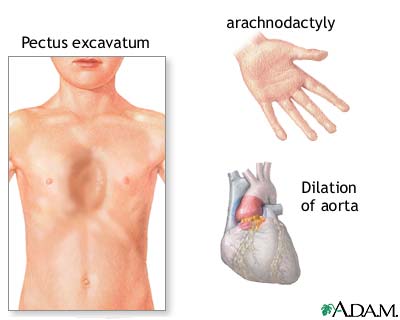
--you fear aortic dissection
--you've heard about this d-dimer thing...but is it ready for prime-time?
HIGH IN PE/DISSECTION, NOT SO MUCH IN MI: (PMID: 21478122)
--purpose of this research was to define the D-dimer value for discrimination between AAD, PE and AMI.
--consecutive series of 35 AAD, 22 PE and 206 AMI patients
--D-dimer values of patients with AAD (32.9 ± 66.7 g/ml, p<0.001) and PE (28.5 ± 23.6 g/ ml, p<0.001) were significantly higher than those of AMI patients (2.1 ± 3.7 g/ml).
--A cutoff value of 5.0 g/ ml was effective in distinguishing AAD and PE from AMI, with a sensitivity of 68% and a specificity of 90% (ok, but not great)
GOOD SENSITIVITY IS PROMISING... (PMID: 21296332)
--Review and meta-analysis to examine use of d-dimer as screening tool for aortic dissection.
--A value of 500 ng/ml was defined as the threshold for a positive plasma DD finding because it is widely used for ruling out pulmonary emboli.
--Identified 7 studies involving 298 subjects with aortic dissection and 436 without.
--When data were pooled across studies:
- sensitivity high (0.97, 95% confidence interval [CI] 0.94 to 0.99)
- negative predictive value high (0.96, 95% CI 0.93 to 0.98)
- specificity low (0.56, 95% CI 0.51 to 0.60)
- positive predictive value low (0.60, 95% CI 0.55 to 0.66)
NOT QUITE READY? (PMID: 21546117)
--There is inadequate evidence to support the use of D-dimer to exclude acute aortic dissection.
--registry data reported by Suzuki et al provide the most valid estimates for D-dimer sensitivity and specificity; however, the relatively small sample size (N=220) resulted in imprecise estimates, with a lower limit of the 95% confidence interval (CI) of 0.90 for sensitivity and 0.38 for specificity.
--A conservative estimate based on these results indicates that the negative likelihood ratio for D-dimer is approximately 0.2 and the positive likelihood ratio is 1.5. If these approximations are validated in a larger prospective study, a positive D-dimer result would have no value in clinical decisionmaking, but a negative D-dimer result may decrease the probability of aortic dissection to a moderate degree.
--However, to rule out aortic dissection with a negative D-dimer result, the pretest probability would have to be very low.
--Unfortunately, unlike pulmonary embolism or acute myocardial infarction, there are no validated clinical prediction rules to aid clinicians with establishing a pretest probability of aortic dissection.
BOTTOM LINE:
--studies used d-dimer cutoff of 500ng/ml
--high (but not perfect) sensitivity (90+%), low specificity
--potentially useful with patients with low pretest probability for aortic dissection
--since no validated prediction rules (like Wells/PERC for PE) for dissection, not quite ready for primetime
Submitted by J. Gullo.
Reference(s): PMID: 21478122; PMID: 21296332; PMID: 21546117; picture