Wednesday, December 21, 2011

ethylene glycol ingestion and Wood's lamp-ing urine

NICE IDEA:
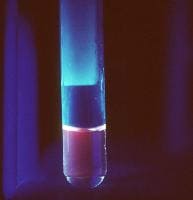
--most antifreeze (which contains ethylene glycol) has fluorescein added to it

--fluorescein should light up with a Wood's lamp (=blacklight = UV)
--can you light up a patient's face (to see if they drank some) and/or urine (to see if they're peeing it out) to help your diagnosis?


NOT THAT USEFUL, SADLY:
STUDY 1: 60 docs in 2 groups; 150 urine specimens, all of which were fluorescent by flow cytometry
--Group 1 reported fluorescence in 80.7% of urine specimens
--group 2 reported fluorescence in 69.3%
--Interrater agreement was poor (72.5%)

STUDY 2: 2 docs, 27-30 urine specimens; shown sequentially or together on a test tube rack
--sequential: sensitivity 35%, specificity 75%, accuracy 48% for detecting florescein
--grouped:  sensitivity 42%, specificity 66%, accuracy 50%


BOTTOM LINE:
--urine fluorescence for ethylene glycol ingestion, nice idea, not too clinically useful
--not very sensitive, specific, or accurate
--we suck at eyeballing fluorescence, apparently
--stick with anion/osmol gaps, clinical judgement, etc.


Reference(s): study 1, study 2, another study that agrees, picture

Tuesday, December 20, 2011

Dexamethasone Instead of Prednisone for Acute Asthma

EMERGENCY MEDICINE NEWS:
--this month's journal had a nice breakdown of a couple articles about using dex instead of prednisone to treat asthma exacerbations. head over there for details, its a decent read


10-SECOND VERSION:
--corticosteroids (with bronchodilators) help avoid admission & ED relapse in acute asthma exacerbations
--dexamethasone has longer half-life (days) than prednisone (hours)
--dex 0.6mg/kg daily (x 2 days) vs. prednisone 1mg/kg daily (x 5 days)
--adult size: dex 16mg/day vs. pred 60mg/day
--limited studies, but generally dex was same or slightly better
--dex is probably ok alternative to pred

Reference(s): emergency medicine news: article, uptodate.com: prednisone, dexamethasone, picture

Monday, December 19, 2011

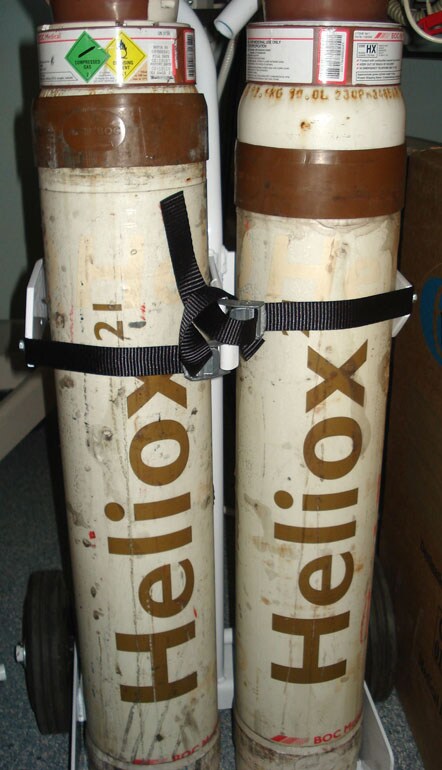
heliox for acute asthma

COCHRANE REVIEW:
--10 small RCT’s (7 adults, 3 children), 544 acute asthma patients comparing inhaled heliox vs placebo (O2, air) in addition to standard treatment found no difference in PFT’s or admission to hospital (1)

--However, in subgroup of patients with severe baseline pulmonary function, heliox did improve PFT so may be some benefit to use in patients w/severe airway obstruction


PEARLS:
--Should be considered after 1st (albuterol, Duoneb, steroid) and 2nd (mag, terbutaline, epi) line therapies fail and patient still has some reserve

--“Heliox-driven albuterol nebulization may be considered for patients who have life- threatening exacerbation or who remain in severe exacerbation after intensive conventional adjunctive therapy” (2)

--Since generally given in mixtures of 70:30 (helium:O2) CANNOT use in patients who are hypoxemic (i.e. need 50% FiO2)

--If the patient needs to be intubated, INTUBATE!


Submitted by F. DiFranco.


Reference(s): (1) i.Rodrigo GJ, Pollack CV, Rodrigo C, Rowe BH. Heliox for non-intubated acute asthma patients. Cochrane Database of Systematic Reviews 2006, Issue 4; (2) Cincinnati Children's Hospital Medical Center. Evidence-based care guideline for management of acute asthma exacerbation in children. Cincinnati (OH): Cincinnati Children's Hospital Medical Center; INFO@GUIDELINES.GOV 2011, picture

Friday, December 16, 2011

thyroid storm treatment

Treat symptoms with Beta blocker:
--propranolol: also slows peripheral conversion of T4 to T3
--lesser options: esmolol, metoprolol, calcium channel blockers (diltiazem)


Inhibit thyroid hormone synthesis (works in 1-2 hrs):
--propylthiouracil (PTU): blocks thyroidal peroxidase, also inhibits T4 to T3 conversion
--lesser options: methimazole


Block release of thyroid hormone:
--iodine: give ~1 hour AFTER other stuff, otherwise it’ll form MORE thyroid hormone


Steroids (thyroid storm can precipitate adrenal insufficiency, maybe autoimmune effects if Grave's disease):
--dexamethasone: also blocks T4 to T3 conversion
--other options: hydrocortisone


10-SECOND RECAP:
--thyroid storm is not awesome
--treat symptoms, stop thyroid hormone synthesis, inhibit release, give steroids
--ideally: propranolol, PTU, waaaaaiiit an hour, iodine, dexamethasone


Reference(s): uptodate.com: thyroid storm, Tintinalli p. 1312-3, picture

Thursday, December 15, 2011

costal margin tenderness: indication for abdominal CT?

STUDY 1:
--Do patients with pain or tenderness to the left lower ribs after blunt traumatic injury require abdominal computed tomography (CT) scanning for the detection of splenic injury?

875 patients had left lower rib pain or tenderness
--63 (7.2%; 95% confidence interval [CI] 5.6% to 9.1%) patients had splenic injuries
--20 (2.3%; 95% CI 1.4% to 3.5%) patients had left renal injuries

301 (of 875 total) patients had "isolated" left lower rib injury (i.e. no other reason to get a CT)
--9 (3.0%; 95% CI 1.4% to 5.6%) had splenic injuries
--All 9 patients had a pleuritic component to their rib tenderness, and 3 (33%) patients underwent splenectomy

--"A small but important percentage of patients with pain or tenderness to the left lower ribs has splenic injuries. All patients with splenic injury had pleuritic pain."


STUDY 2:
--derive and validate clinical prediction rules to identify adult patients at very low risk for intra-abdominal injuries after blunt torso trauma

derived rule for the presence of any intra-abdominal injury:
  • GCS < 14
  • costal margin tenderness
  • abdominal tenderness
  • femur fracture
  • hematuria >= 25 RBCs/HPF
  • hematocrit < 30%
  • abnormal CXR (pneumothorax or rib fracture)
--sensitivity 137 of 143 (95.8%; 95% CI 91.1% to 98.4%)
--specificity 434 of 1,452 (29.9%; 95% CI 27.5% to 32.3%)
--negative predictive value 434 of 440 (98.6%; 95% CI 97.1% to 99.5%).

--"Patients without any of these variables are at very low risk for having intra-abdominal injury, particularly intra-abdominal injury requiring acute intervention, and are unlikely to benefit from abdominal computed tomography scanning"


BOTTOM LINE:
--2-7% those with left lower rib/costal margin pain can had splenic injury
--consider abdominal CT if patient with blunt trauma has left costal margin pain, particularly if pleuritic


Reference(s): study 1, study 2, picture

Wednesday, December 14, 2011

blood pressure control guidelines (head bleed, dissection, AAA)


RAGING HYPOTHETICAL:
--you have a patient with a vessel somewhere that has either ruptured or is about to
--you call the appropriate surgeon, who is on the way, but in the meantime, what can you do?


MINIMIZE THE DAMAGE:

ICH:
--lowering to SBP 140-160 probably safe
--theory: less/slower hematoma growth
--options: nicardipine (less cerebral vasospasm)

AORTIC DISSECTION:
--SBP 100-120, HR <60
--theory: reduce shear forces
--options: beta blocker (labetolol push, esmolol drip), nitroprusside

RUPTURED AAA:
--goal SBP 80-100
--theory: permissive hypotension; bleed slower, less likely to blow out the few clots they're making


Reference(s): uptodate.com: Ruptured abdominal aortic aneurysm, management of aortic dissection, Spontaneous intracerebral hemorrhage: Prognosis and treatment, Kodama K, et al. Tight heart rate control reduces secondary adverse events in patients with type B acute aortic dissection, picture

Tuesday, December 13, 2011

serum glucose and calcium channel blocker and beta blocker overdose

RAGING HYPOTHETICAL:
--you have a patient that is bradycardic/hypotensive/unresponsive/dead
--you suspect calcium channel blocker or beta blocker overdose
--nurse has done a fingerstick glucose--how does this help you?


BLOOD GLUCOSE (in a non-diabetic=helpful):
--calcium channel blocker OD:  hyperglycemia (BG is high)
--beta blocker OD: hypoglycemia (BG is low)


WHY?
--calcium channel blockers:
  • hyperglycemia caused by inhibition of calcium-mediated insulin release 
--beta blockers:
  • epinephrine, acting via the beta-adrenergic receptors, has important effects on glucose metabolism
  • increases glucose production by stimulating both glycogenolysis and gluconeogenesis
  • increases the delivery of these gluconeogenic substrates from the periphery
  • inhibits glucose utilization by several tissues
  • via the alpha-2-receptors, inhibits insulin secretion
  • BLOCK all these, glucose gets low


TREATMENT OPTIONS:
--ABCs, IVF
--calcium
--glucagon
--high dose insulin/glucose
--pressors
--lipid emulsion


10-SECOND TAKEAWAY:
--calcium channel blocker OD: glucose is high
--beta blocker OD: glucose is low
--treatment toolbox: calcium, glucagon, insulin/glucose, pressors, lipid emulsion


Reference(s): uptodate.com: calcium channel blocker poisoning, beta blocker poisoning, major side effects of beta blockers, picture